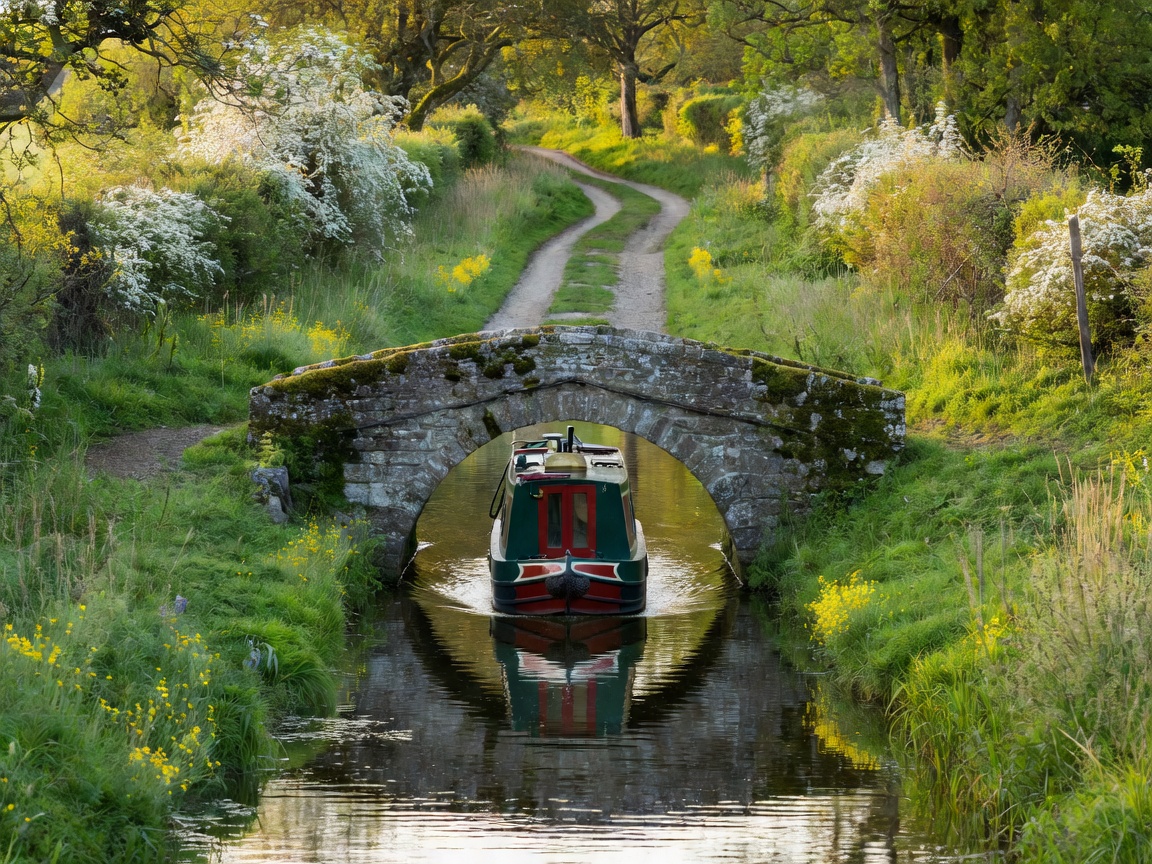
Start with route length and pace
Route length is not a useful number without a pace assumption. A short route can feel full if it includes locks, bridge openings, town stops and provisioning. A longer route can feel calm when the waterway is straightforward and the group is happy to travel steadily. Decide how many active travel days you want, then reserve space for arrival, departure, weather and unplanned pauses.
Locks change the rhythm. A lock is a chamber that raises or lowers a boat between water levels. Each one adds a navigation task and may require crew coordination. Some groups enjoy that practical involvement. Others prefer a route with fewer lock operations. Do not infer lock difficulty from a map alone. Read the operator’s briefing and local guidance.
Route structures
Short routes reduce transfer time and can suit first-time groups, shorter breaks or travellers who want more time in one area. Their limitation is reduced geographic range. A small route still needs a plan for turning, mooring and access to supplies.
Longer routes offer more landscape and settlement changes. They also increase exposure to delays, weather shifts, fatigue and return-point pressure. They work best when the group accepts that not every waypoint will fit.
Linear routes travel from one point to another. They can provide a stronger sense of progress and access to different towns, but transport arrangements at each end become part of the plan. Check whether the boat arrangement supports a one-way journey.
Circular routes return to the starting area. They simplify vehicle planning and can provide varied scenery. The route may include more locks or junction decisions. A circle is not automatically easier than an out-and-back journey.
Rural routes prioritise quiet banks, towpaths and landscape. Provisioning and evening access may be less convenient. Town-focused routes offer food, markets, museums and transport connections, but may bring more bridges, traffic and limited mooring opportunities.
Build a route file
List the waterway type, preferred scenery, lock tolerance, town interest, likely mooring approach and provisioning needs. Mark potential return points without treating them as guaranteed facilities. Consider where the group can stop safely and legally, and how far the next practical service may be. Availability, opening times and local restrictions can change, so current operator and authority information remains essential.
Weather affects comfort and decisions even on sheltered waterways. Wind, rain, heat and reduced daylight can alter the day’s useful margin. A sensible route has options: a shorter stopping point, a town day, a rest day or a point where the boat can remain safely while plans change.
Navigation requirements
Ask what experience the route expects. Some waterways involve frequent locks, bridge signals, larger vessels or more exposed stretches. Others are calmer but still require attention to signs, depth, passing space and mooring etiquette. Use the boat operator’s instructions and local waterway rules. Never treat this guide as a substitute for practical induction.
Decision summary
Route availability, restrictions and prices are not verified here. Use the planning guide →